
Fuel Filter Replacement Service
Keep Your Vehicle Running Smoothly with Proper Fuel Filter Care in Fresno, CA
Fuel filter service intervals depend entirely on your vehicle's engine design and fuel architecture. Diesel trucks require routine fuel filter replacement roughly every 22,500 miles under normal conditions-or 15,000 miles under severe duty-while older gasoline models with external filters typically require service every 30,000 to 40,000 miles. Conversely, most modern gasoline passenger vehicles feature integrated in-tank fuel filters designed as lifetime components that are only replaced alongside the fuel pump assembly.
Ford maintenance recommendations emphasize following the specific service intervals listed in your vehicle owner's manual rather than applying a universal rule. Diesel powertrains, such as the heavy-duty 6.7L Power Stroke V8, utilize high-pressure direct-injection systems that are exceptionally sensitive to particulate contamination and water intrusion. For these engines, maintaining dual-filter assemblies-which include both a primary frame-mounted fuel conditioner module and a secondary engine-mounted filter-is critical to prevent costly fuel system damage.
Driving conditions across the Central Valley heavily influence how rapidly fuel filtration media degrades, necessitating adjustments to service intervals based on local environmental factors. In agricultural hubs like Selma, where work trucks encounter fine topsoil dust, prolonged idling, and heavy hauling, fuel systems experience severe service conditions. Under these environment-specific demands, dirty air and fuel tank condensation accelerate filter loading, making earlier replacement intervals necessary to preserve optimal fuel delivery.
When your truck or SUV reaches its designated maintenance threshold, our service team provides specialized care using factory-engineered replacement parts. To set up an inspection or maintenance visit, reach out directly to 877-621-1084 or visit our Fresno service department.
Fuel Filter Service Overview
What Are the Signs of a Dirty Fuel Filter and How Does It Affect Performance?
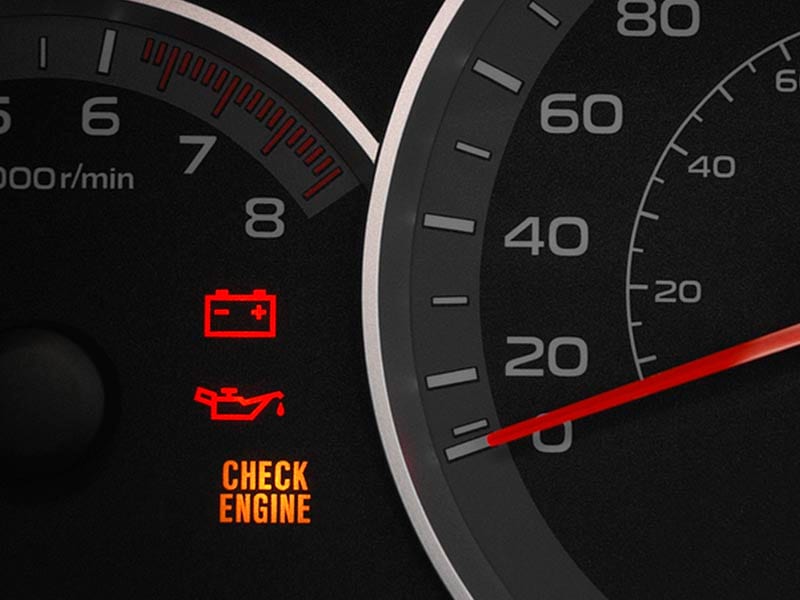
A restricted fuel filter starves the engine of required fuel pressure and volume, leading to engine hesitation, hard starting, rough idling, misfires, and noticeable power loss under heavy loads. Severe fuel starvation can also trigger the check engine light by causing lean air-fuel mixture diagnostic trouble codes.
When a fuel filter becomes saturated with sediment, rust, or organic debris, the engine struggles to draw sufficient fuel during high-demand driving scenarios. Drivers traveling through the elevated terrain near Madera often notice this issue first as a sudden loss of pulling power while climbing steep highway grades or towing trailers. Under maximum throttle, a restricted fuel line cannot maintain the target pressure, causing the powertrain control module to adjust ignition timing or limit output to prevent internal combustion damage.
- Hard starting or extended engine cranking before ignition turns over
- Hesitation, stumbling, or surging during sudden acceleration
- Noticeable loss of power when hauling heavy loads or climbing inclines
- Rough engine idling, severe shuddering, or unexpected engine stalling at stops
- Illumination of the check engine light due to system lean conditions
Beyond performance degradation, a clogged filter directly impacts long-term mechanical reliability. Modern high-pressure fuel injectors utilize micro-fine nozzle spray holes to atomize fuel into the combustion chamber. When a degraded filter allows micro-contaminants or water past its porous barrier, those particles cause abrasive wear inside the injector bodies, scoring internal valve surfaces and altering fuel spray patterns. Additionally, filling up with low-quality gasoline from unmaintained storage tanks introduces higher levels of suspended particulates, causing filtration media to clog far faster than standard maintenance schedules anticipate.
If your vehicle exhibits hesitation under load or struggles to hold power on highway inclines, bring it in to schedule a fuel filter replacement with our certified technicians. We stock high-efficiency filtration units and allow you to order genuine OEM fuel system components directly for your specific model.
How Do In-Tank and Inline Fuel Filters Differ From Fuel Pumps?
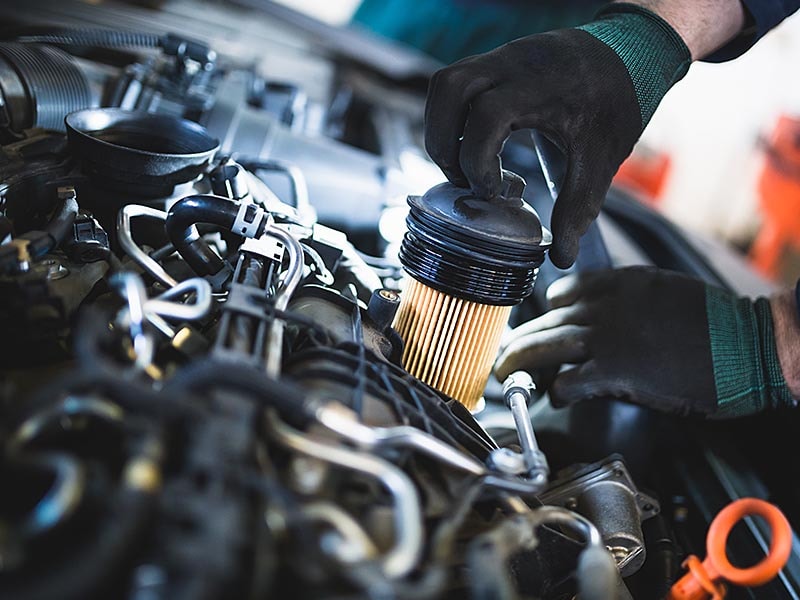
An in-tank fuel filter is typically a non-serviceable mesh strainer integrated directly into the fuel pump module inside the gas tank, whereas an inline filter is a standalone, replaceable canister mounted along the exterior fuel frame rail. Replacing a fuel filter installs new filtration media to catch debris, whereas replacing a fuel pump swaps out the electromechanical motor responsible for pressurizing the entire fuel delivery system.
Older passenger cars and most heavy-duty diesel platforms rely on external inline filters. These units sit between the gas tank and the engine intake, using fine paper or synthetic pleated materials to capture particles down to several microns in size. Because they are positioned in accessible underbody or engine bay locations, inline filters can be serviced independently without disturbing the fuel tank structure. In contrast, modern gasoline passenger vehicles group the pump, pressure regulator, fuel level sending unit, and filtration strainer into a single submerged module. These in-tank strainers act as coarse pre-filters designed to last the functional lifetime of the pump motor itself.
A severely clogged fuel filter can directly destroy an electric fuel pump. Electric fuel pumps rely on a continuous, unrestricted flow of gasoline or diesel passing through the pump housing for internal cooling and lubrication. When an inline filter or internal strainer becomes heavily obstructed, the electric pump motor must work significantly harder to push fuel against the backpressure. This extra resistance forces the motor to draw higher electrical current, generating intense internal heat that breaks down motor winding insulation and causes premature mechanical pump failure.
Understanding the mechanical distinction between fuel flow restriction and mechanical pump failure helps drivers address performance issues early before a simple filter replacement escalates into a complete fuel pump module overhaul.
Common Questions About Fuel Filter Maintenance and Care
Q: Do diesel vehicles need fuel filter changes more frequently?
Yes, diesel engines require significantly more frequent fuel filter changes than gasoline vehicles because diesel fuel is more prone to water contamination, paraffin wax buildup, and microscopic particulate debris. Heavy-duty diesel engines, such as the 6.7L Power Stroke V8, feature high-pressure common-rail injection systems that demand clean fuel to maintain internal pressures up to 30,000 psi. Most diesel manufacturers specify replacing both primary and secondary fuel filter elements every 22,500 miles during standard driving, or every 15,000 miles during severe duty, heavy towing, or frequent biodiesel usage.
Q: Will a clogged fuel filter trigger a Check Engine light code?
A severely restricted fuel filter frequently triggers diagnostic trouble codes related to fuel delivery imbalances. When a clogged filter drops fuel rail pressure below target parameters, the oxygen sensors detect an excess of unburned air relative to fuel in the exhaust stream. The engine control unit recognizes this lean condition and illuminates the dashboard light, storing diagnostic trouble codes such as P0171 (System Too Lean Bank 1) or random misfire codes such as P0300.
Q: Are in-tank fuel filters cleanable or non-serviceable?
In-tank fuel filters and sock strainers are non-serviceable components designed to remain in place for the operational lifespan of the fuel pump module. These fine mesh strainers cannot be flushed or cleaned effectively once saturated with sediment. When an in-tank filtration strainer becomes restricted or damaged, technicians replace the entire integrated fuel pump assembly to restore correct system pressure and volumetric flow rate.
Q: What factors cause fuel filter replacement costs to vary?
Fuel filter replacement costs vary based on component accessibility, engine architecture, and total labor requirements. Servicing an external inline filter on a traditional fuel rail is straightforward and requires minimal shop labor. Conversely, servicing a dual-filter diesel setup involves bleeding the fuel system and replacing primary water-separator cartridges, while servicing a modern gasoline in-tank filter requires dropping the fuel tank assembly entirely, significantly increasing labor time.
Q: Can poor quality gasoline clog a fuel filter faster?
Gasoline purchased from aging or poorly maintained fuel station storage tanks often contains higher concentrations of rust flakes, dirt, and water condensation. These solid contaminants quickly coat the porous surfaces of the fuel filter, causing premature clogging well before standard factory maintenance intervals. Keeping your tank above a quarter-full reduces sediment concentration and minimizes thermal stress on the fuel pump.
Routine maintenance keeps your vehicle running reliably across every season. Our service department assists owners with overall vehicle health by offering convenient options for scheduling a maintenance appointment online.
Professional Fuel System Care at Lithia Ford of Fresno
Maintaining a clean fuel filtration system protects sensitive fuel injectors, prevents unexpected pump overwork, and guarantees smooth power delivery across all driving conditions. Whether you operate a heavy-duty diesel work truck or a daily commuter, addressing fuel filter maintenance according to factory guidelines prevents minor debris accumulation from turning into expensive roadside breakdowns.
Our service department is fully equipped with factory-trained technicians, advanced diagnostic scan tools, and high-quality Motorcraft replacement filters tailored precisely to your engine's requirements. From quick diagnostic checks for check engine light codes to complete fuel system flushes and filter replacements, our team delivers complete ownership care focused on long-term vehicle reliability.
Take proactive steps to protect your engine's performance today. Visit our convenient location at 195 East Auto Center Drive Fresno, CA 93710, or call our service team at 877-621-1084 to speak with an advisor and confirm the correct maintenance schedule for your vehicle.
© 2026 Lithia Ford of Fresno. All rights reserved.
*All mileage is EPA estimated.
Contact Us About Fuel Filter Service.
* Indicates a required field
-
Lithia Ford of Fresno
195 East Auto Center Drive
Fresno, CA 93710
- Sales: 877-621-1084